Home › Outfit guide › What to wear when mornings are cold and afternoons are warm
What to wear when mornings are cold and afternoons are warm
In spring and fall the gap between the morning and midday temperature is often more than 10°C (18°F). Dress for the morning and you’re hot by noon; dress for noon and the commute is cold. On days like this, the trick is to split your outfit into “what comes off” and “what stays on” instead of picking one look.
Base on the afternoon, outerwear for the morning
Match what you wear underneath to the midday temperature, when you spend most of the day, and handle the morning and evening chill with one outer layer. For example, with 9°C (48°F) in the morning and 20°C (68°F) at midday, a long-sleeve tee or thin shirt underneath and a trench coat or light jacket on top works well.
Pick outerwear that’s easy to take off
You’ll be carrying it at midday, so a compact layer that doesn’t wrinkle easily is the most convenient. Cardigans, shirt jackets and thin windbreakers fold easily into a bag. A thick wool coat, on the other hand, is a burden to carry around in the afternoon.
- Outerwear: cardigan, shirt jacket, windbreaker, trench coat
- Underneath: long-sleeve tee, thin knit, shirt
Adjust with your neck and ankles
Warmth you only need briefly in the morning can come from a thin scarf or socks. A scarf goes straight into your bag at midday, so you can skip a whole layer.
Think about the way home, too
The temperature drops again in the evening, and after sunset the wind can make it feel colder than the morning. Don’t leave your jacket behind just because it got warm at noon — keep the layer you wore in the morning with you all day.
Outfit examples
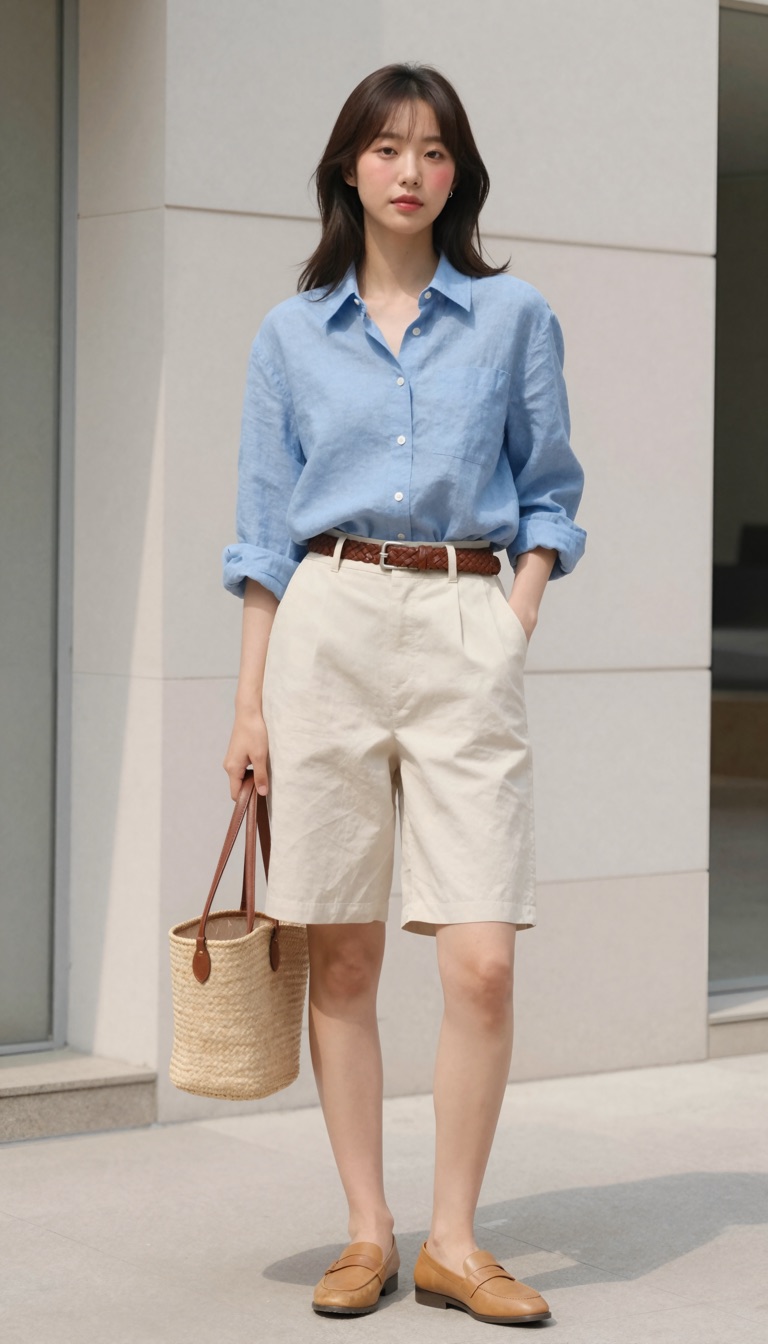
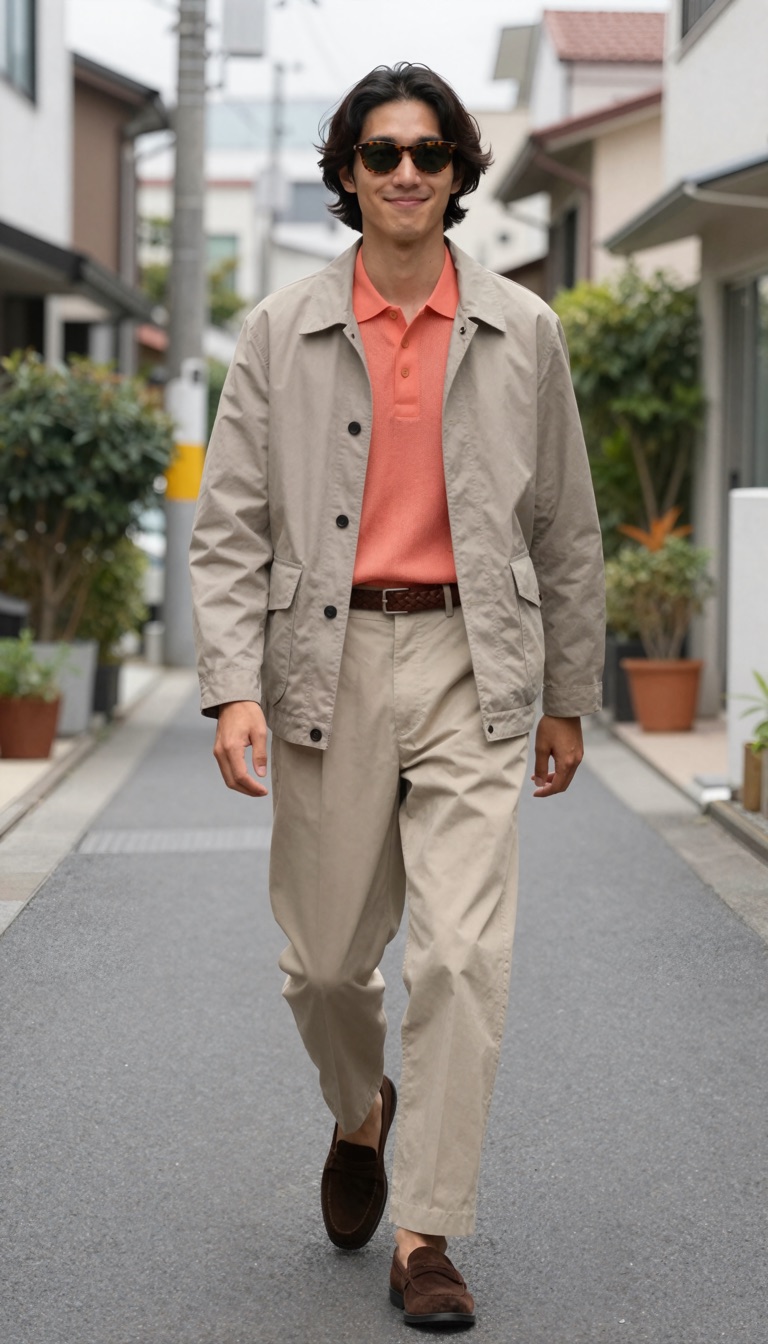
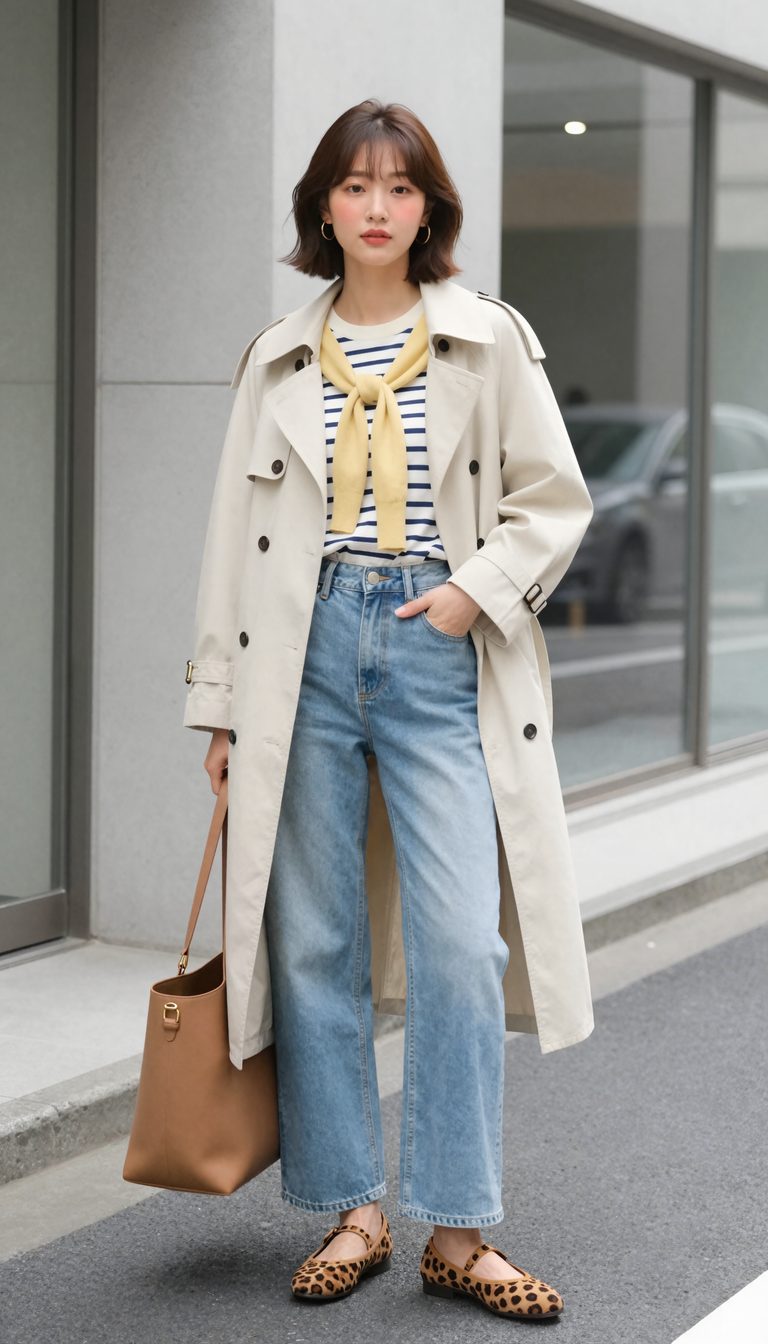
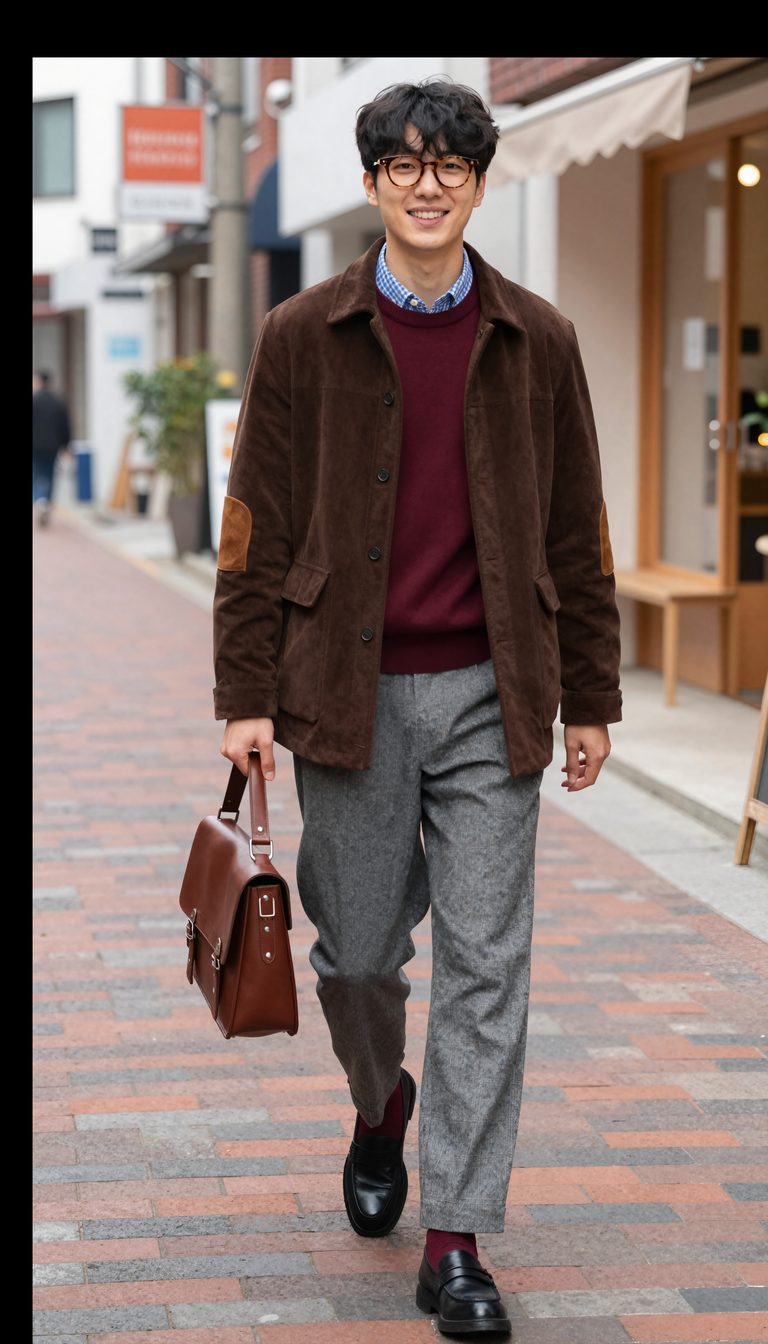
Lookbook images are AI-generated examples.
What to wear at related temperatures
- What to wear in 20–22°C (68–72°F) — a long-sleeve tee, a thin cardigan, slacks
- What to wear in 17–19°C (63–66°F) — a light knit, a sweatshirt, a cardigan or windbreaker
- What to wear in 12–16°C (54–61°F) — a jacket, cardigan, field jacket or denim jacket with slacks
- What to wear in 9–11°C (48–52°F) — a trench coat, field jacket or bomber with fleece-lined trousers
More outfit tips
- What to wear on a rainy day — Fabrics and colors that don’t show the wet, and how to pick shoes — a guide to dressing for rainy commutes.
- What to wear on a snowy day — How to stay warm and neat on slippery, slushy streets, in order: outerwear, bottoms and shoes.
- What to wear on a windy day — Wind makes the same temperature feel much colder. How to choose fabrics and silhouettes that block it.
- What to wear on a hot, humid day — For humid summer days like the rainy season: outfits that trap less sweat and show less, chosen by fabric and color.
Last updated: