Home › Outfit guide › What to wear on a rainy day
What to wear on a rainy day
On a rainy day, choosing clothes gets easier if you think first about “what happens when it gets wet” rather than the temperature. Even with an umbrella, your trouser hems, shoes and the bottom of your bag will get wet, so decide on those first and match the rest around them.
Fabric: dries fast and doesn’t get heavy
Cotton jeans and thick knits soak up water, get heavy and stay damp all day. Synthetic fabrics like polyester and nylon, and water-repellent windbreakers or trench coats, work better in the rain.
Linen dries quickly but can turn see-through when wet, so on rainy summer days a darker linen is the safer choice.
- Outerwear: water-repellent windbreaker, trench coat, nylon jacket
- Bottoms: slacks, nylon trousers, skirts below the knee
- Better to avoid: thick cotton jeans, suede, wide trousers that drag on the ground
Color: dark shades hide stains
Mud splashes and raindrop marks stand out more the lighter the color. Choose dark bottoms and shoes like navy, charcoal or black, and add light colors through your top or accessories so you don’t look gloomy on a gray day.
Length: keep the hems dry
When trouser hems touch the ground they wick up rainwater, sometimes all the way to the knee. A cropped length that shows the ankle, or hems rolled once or twice, gets far less wet. If you love wide trousers, switch to a shorter pair just for rainy days.
Shoes and accessories
Leather or canvas sneakers stay wet all day once they soak through. You don’t need rain boots — shoes with thick rubber soles and a synthetic upper are enough. Pick a nylon or coated bag, and carry a plastic pouch for your wet umbrella so it’s easy at the office too.
- Shoes: rain boots, rubber-soled loafers, synthetic sneakers
- Accessories: nylon bag, folding umbrella, spare socks
How rain changes how cold it feels
Rain makes the same temperature feel chillier. Especially in spring and fall, we recommend dressing for one temperature band lower than the forecast and bringing an extra light layer. In the summer rainy season it’s the opposite: the humidity makes it feel hotter, so breathable clothes are best.
Outfit examples
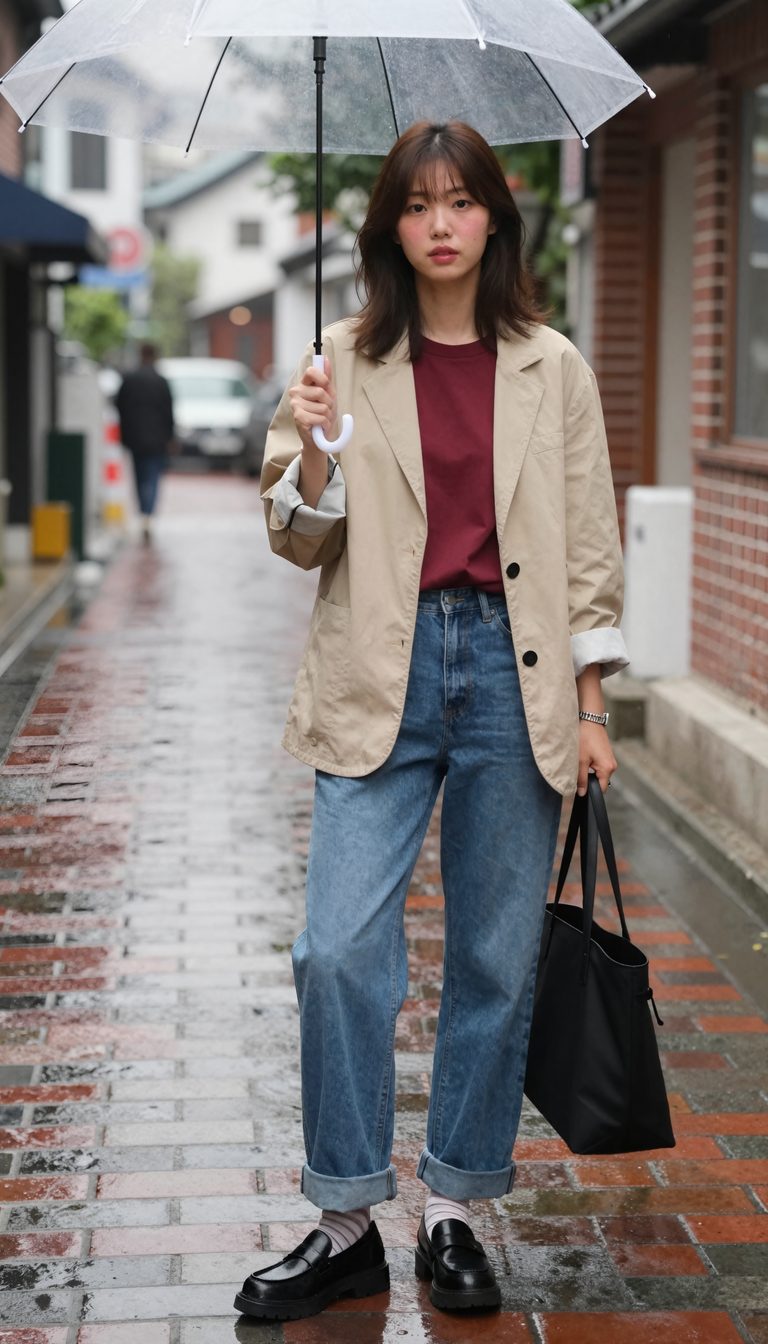
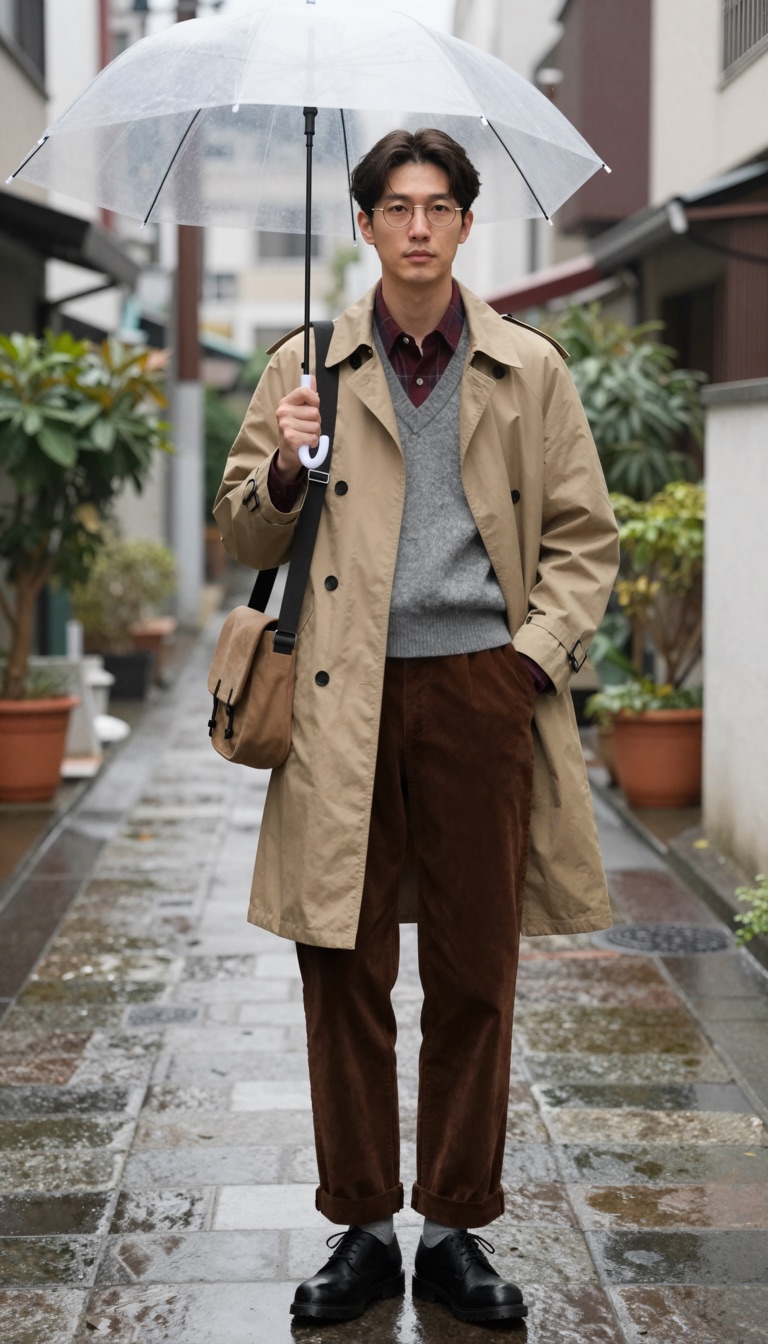
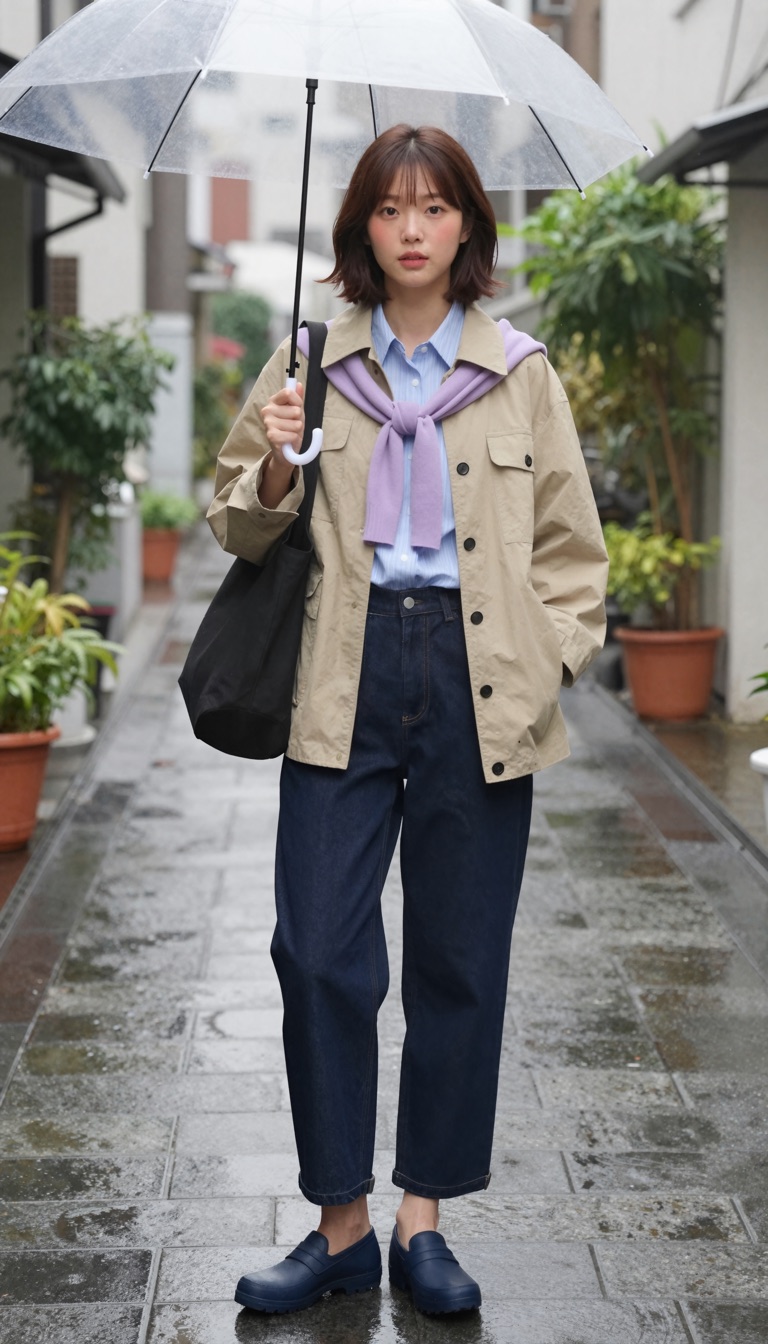
Lookbook images are AI-generated examples.
What to wear at related temperatures
- What to wear in 23–27°C (73–81°F) — short sleeves, a thin shirt, cotton trousers
- What to wear in 17–19°C (63–66°F) — a light knit, a sweatshirt, a cardigan or windbreaker
- What to wear in 12–16°C (54–61°F) — a jacket, cardigan, field jacket or denim jacket with slacks
More outfit tips
- What to wear on a snowy day — How to stay warm and neat on slippery, slushy streets, in order: outerwear, bottoms and shoes.
- What to wear when mornings are cold and afternoons are warm — Chilly mornings and warm afternoons in spring and fall: how to get through the day with layers that are easy to take off and put on.
- What to wear on a windy day — Wind makes the same temperature feel much colder. How to choose fabrics and silhouettes that block it.
- What to wear on a hot, humid day — For humid summer days like the rainy season: outfits that trap less sweat and show less, chosen by fabric and color.
Last updated: